


A Potential Positive of the Pandemic
- Mary Kate Donahue

- May 25, 2020
- 4 min read
After seeing an influencer’s Instagram post boosting amazing deals at H&M, I dove headfirst into their website. While scrolling through tops that ranged from $8.99 to $40.99, I received a text from my sister that read, “Interesting article! Saw it and though of you!” Momentarily abandoning my online shopping, I clicked on the Business Insider article. All of a sudden—in big, bold, black letters—my screen read “One of the most influential people in fashion hinted that the coronavirus pandemic could end the era of inexpensive, disposable fashion popularized by Forever 21 and H&M.”
Throughout the pandemic, I have read a series of articles and reports hinting at similar phenomena. The irony that I was currently online shopping at H&M while my sister texted me this article gave it much more impact. I immediately clicked the bright red “X” on the computer tab for H&M.

Sure, I love the allure of retailers like Zara, H&M, Topshop, and Mango, among many others. Simultaneously, I hate them and their tactics. Fast fashion retailers grant widespread access to affordable, trendy clothing. However, cheap price tag of the garments come at a much higher cost on the whole—forced labor, child labor, environmental impact, textile waste, and the list goes on. Not to mention, the fashion industry now lacks much design diversity due to fast fashion. If you have seen one white puff sleeve top online recently, you have most likely seen at least a dozen that look extremely similar.
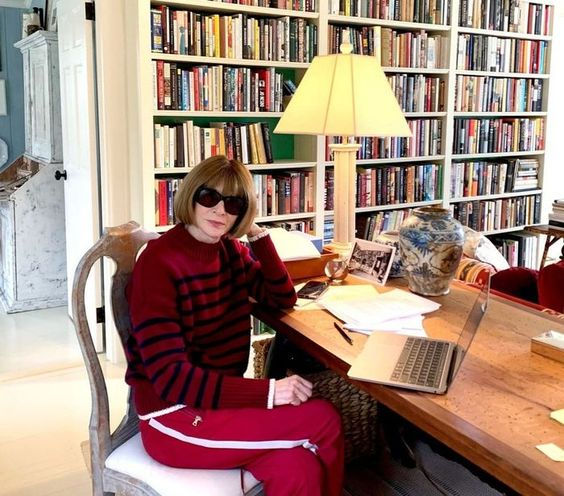
In the Business Insider article, Anna Wintour notes, “Fashion should last, it should be emotional, it should have memories, it should be meaningful, and think that we need to reevaluate – all of us that work in this industry – how we can best present that."
This anecdote really struck a chord with me. It made me think if I have meaningful memories with every item of clothing hanging in my closet—and the answer is no. Sure, I have fond memories from several garments—the Rhode dress that I recently thrifted from Poshmark to give it a second life, the blouse my mom bought me from a boutique in New York City in 2015 that I have worn on hundreds of occasions, the dress I wore to my senior formal in college. However, there are several pieces that hang in my closet and I have no real attachment to—the blue tulle Zara top that I bought on sale in December and still have not worn or the gold sequin cocktail dress I wore to my “Snowflake” dance during freshman year of high school (2012) and have not touched since.
Unfortunately, the pandemic’s effect on the fashion industry has and will undoubtedly continue to cause thousands of job losses. In the short term, these circumstances will be hard to navigate, unchartered waters for the industry. However, the strong (read: the sustainable) brands will emerge stronger and join forces to benefit the industry, as a whole.
One of the most difficult transitions the industry will face is the cost of sustainable fashion. Years down the road, in a post-pandemic world, where there is no option for an $8.99 shirt on hm.com, some consumers may have trouble adjusting to paying for sustainable fashion. Sustainable garments often come with a steep price tag, but when broken down, the cost can be rationalized. Natural, high quality fibers, a living wage for laborers, niche markets and retail markups all contribute to cost of a sustainably made garment.
Gone are the days of posting an Instagram picture in a Princess Polly outfit and then “retiring” it because now all your friends have seen you in it. Today and moving forward, we should be proud of to hear a friend say, “I love that dress on you!! I know I compliment you on it every time you wear it, but you look adorable and it fits your personality so well.”
I hope that one day, I buy a dress. I love the dress and it becomes my “go-to” dress. Inside the dress, there is a tag that lists where the cotton was grown, the factory where the fiber was made into fabric and the names and country of origin of the laborers who sewed the garment to completion. I wear the dress at least once a week, styling it a little differently each time. When, I accidentally tear a hole in the armpit, I repair it with a needle and thread. I have endless memories while wearing the dress. If Instagram is still in existence, there are at least four different photos (all from different occasions) of me donning the dress. Sure, I could start doing something like this tomorrow (and maybe I will with the Rhode dress I thrifted on Poshmark). However, in order for me to feel truly comfortable doing so and in order for others to follow suit, worldwide consumer behavior needs to change.
During my junior year of college, while having an in-class discussion after watching The True Cost, my professor admitted that it will not be easy to change the fast fashion industry. However, she explained that every time you shop at a fast fashion retailer you “vote” for them to stay in existence. She furthered admitted that, yes, it may feel like one, personal “vote” may seem minute and like it will not make a difference considering the vastness of fast fashion. But, in reality, one “vote” can make a difference.
So, if we can find one potential positive of the pandemic let it be the fact that, soon enough, an increasing number of consumers will be casting their vote against fast fashion. Where are you casting yours?
Hanbury, Mary. (2020, May 24). One of the most influential people in fashion hinted that the coronavirus pandemic could end the era of inexpensive, disposable fashion popularized by Forever 21 and H&M. Retrieved from https://www.businessinsider.com.


Comments